
As the industry confronts the limits of traditional electronics, a steady drumbeat of “breakthroughs” often promises to rewrite the rules. The latest such announcement, originating with researchers at the California Institute of Technology (Caltech), details a new optical chip capable of guiding light with efficiency that supposedly rivals optical fibers. While the potential applications—from compact quantum computers to hyper-efficient AI accelerators—are undeniably compelling, a deeper investigation reveals a far more complex and challenging reality.
Table of Contents
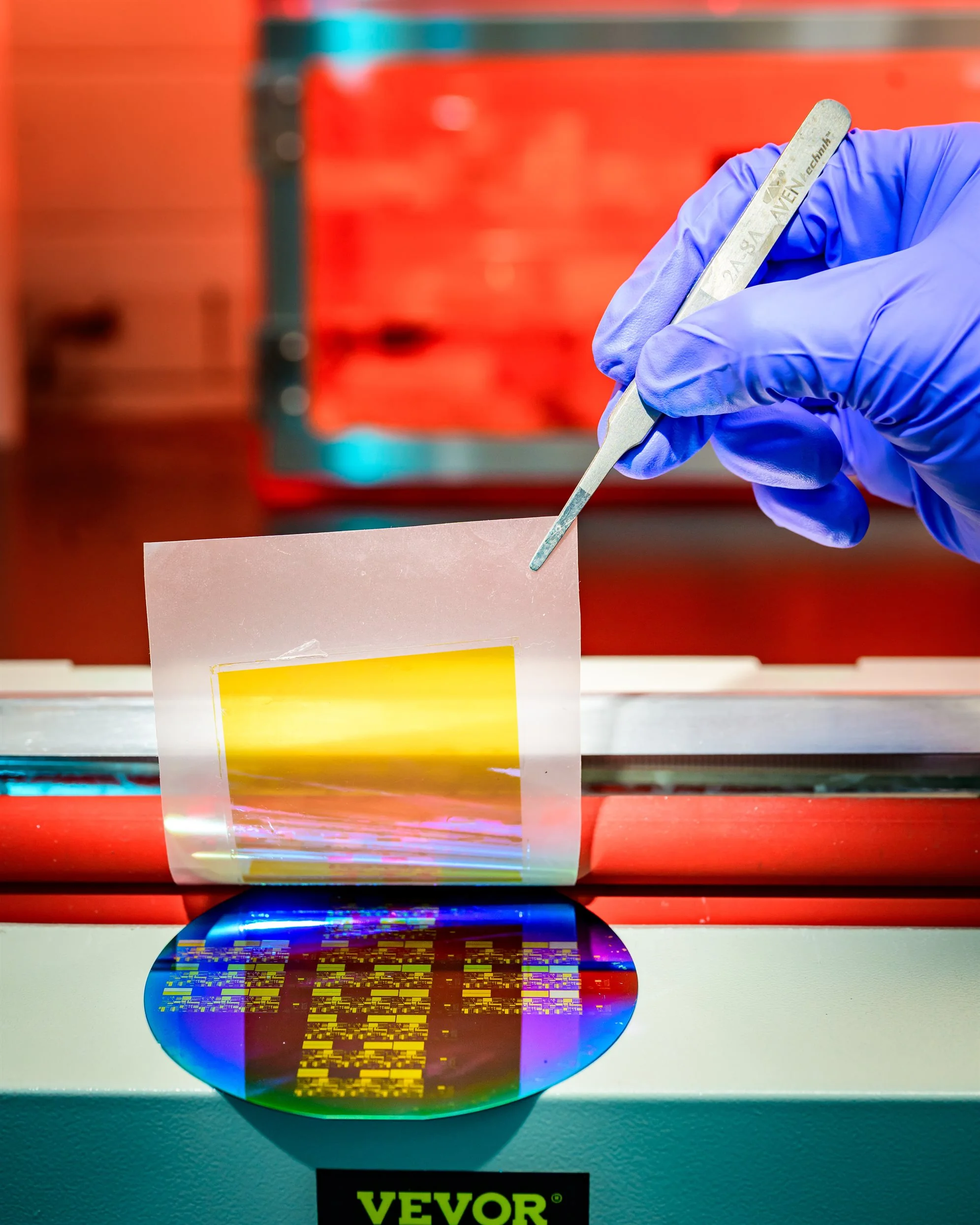
This investigative report cuts through the hype surrounding the latest optical chip developments. We will investigate the immense manufacturing hurdles, the persistent integration challenges, and the stark economic realities that stand between these promising lab results and their widespread, practical deployment in the data centers and devices of tomorrow. The future of computing may be photonic, but the path forward is anything but certain.
Who Really Controls the Light?
In assessing the landscape for the optical chip, one must first identify the titans clashing in this new arena. This is not a battle of nimble startups alone. Tech giants like NVIDIA, Cisco, and Broadcom are investing billions, not just in chip design, but in securing the entire supply chain. NVIDIA, for instance, has been aggressively pre-allocating capacity for critical laser components, pushing lead times out for years and creating shortages for smaller players. This creates a formidable moat, where access to manufacturing and components is as critical as the underlying intellectual property.
The technological barriers are just as significant. While a university lab can produce a handful of record-breaking chips, scaling that to millions of units with consistent performance is a different universe of difficulty. The primary bottleneck is packaging: the precise, sub-micron alignment of optical fibers to the chip. Traditional epoxy-based methods are slow, prone to thermal drift, and notoriously difficult to automate, making them unsuitable for the high-volume production required for data centers. This manufacturing and packaging dilemma is the unglamorous but incredibly important hurdle that most press releases conveniently omit.
Also read: Nvidia pc chip Warning: A New Era or Just More Hype?
Additionally, the sector is fragmented by different material choices, each with its own trade-offs. Indium Phosphide (InP) offers high performance but is brittle and expensive, while Silicon Nitride (SiN) has lower signal loss but lacks a native light source. Silicon Photonics (SiPh), the most common approach, still struggles with the difficult task of integrating lasers directly onto the silicon wafer. This fragmentation prevents industry-wide standardization and creates a complex, costly development environment.
Caltech’s Claims vs. Manufacturing Realities
The news from Caltech, and similar breakthroughs from institutions like Monash University, are scientifically significant. They demonstrate new techniques to control light at the nanoscale with unprecedented precision. However, this performance is seen in highly controlled laboratory environments, using methods that are not yet scalable. The claim of “near-fiber-optic efficiency” is a perfect example. While true for a single device, maintaining that performance across a million-unit production run, where each optical chip must be perfectly packaged and tested, is a monumental challenge.
Industry experts point to a persistent disconnect between lab-demonstrated performance and industrial-scale reality. The core issue is yield. In electronics, manufacturing processes are mature, with yields often exceeding 99%. In photonics, the complexity of aligning optical components, managing thermal crosstalk between the photonics and electronics, and testing for dozens of optical parameters means yields can be dramatically lower. This directly impacts cost, making the optical chip significantly more expensive than its electronic counterparts for many applications. A report from PhotonDelta explicitly states that high manufacturing costs and complex production requirements are major disadvantages currently limiting market penetration.
A further significant challenge is the integration of a light source. A optical chip is useless without a laser, and integrating lasers onto a silicon chip is notoriously difficult and expensive. Most current solutions use “hybrid” or “co-packaged” approaches, where a separate laser chip is placed next to the silicon photonics chip. This adds complexity, cost, and potential points of failure. While companies like Intel and startups are making progress on integrated lasers, a cost-effective, mass-producible solution remains one of the industry’s holy grails.
Recommended: Semiconductor substrate: A Critical Deep-Dive Into Intel’s $3.3B Bet
The Great Contradiction
The core paradox of the optical chip is simple: its greatest strength is also its most significant weakness. The use of light allows for incredible speed and bandwidth, but it also requires an entirely new and immature manufacturing and software ecosystem. As noted in a 2026 report from Photonect, the industry’s focus on incremental performance gains often overlooks the more critical question of scalable manufacturing. This creates friction between the AI-driven demand for more powerful interconnects and the physical reality of producing them.
This tension is clear from analyst reports. While a 2024 Gartner Hype Cycle report noted that photonic computing is gaining traction, it also placed the technology as reaching its plateau in “over 10 years,” signaling a long road to maturity. The challenges are not just technical but also institutional. The industry lacks the deep standardization and talent pipeline that the electronics world has built over decades. Every vendor, from Broadcom to Marvell, has a slightly different approach to co-packaged optics, hindering interoperability and creating vendor lock-in.
This has resulted in two distinct paths forward. On one hand, hyperscalers and giants like NVIDIA are driving the charge, funding development and forcing standardization through sheer purchasing power. On the other hand, a significant portion of the industry remains cautious, waiting for manufacturing costs to come down and for clear standards to emerge. This dynamic suggests that the adoption of the optical chip will not be a smooth, universal transition but a series of targeted, application-specific deployments in areas like high-performance computing and AI training clusters where the benefits outweigh the exorbitant costs.
The Bottom Line on optical chip
Based on the available evidence, the recent breakthroughs in optical chip technology are both promising and perilous. While the science is advancing at a breathtaking pace, the engineering and manufacturing challenges remain immense. The claims of revolutionizing computing must be weighed against the stark realities of production costs, scalability, and the lack of a mature ecosystem. The optical chip is not a magical replacement for silicon; it is a highly specialized tool whose adoption will be dictated by brutal economic and manufacturing realities for the foreseeable future.
Critical Signals to Watch:
- Monitor: The first large-scale deployment of a optical chip-based system by a major cloud provider like AWS, Google, or Azure, beyond a pilot program.
- Watch for: A breakthrough in on-chip laser integration that is explicitly adopted by a high-volume foundry like TSMC or GlobalFoundries.
- Monitor: The establishment of a cross-industry consortium that successfully standardizes co-packaged optics or optical I/O interfaces.
- Monitor: A significant drop in the cost-per-gigabit for optical interconnects that brings them into closer competition with electrical solutions for shorter-reach applications.
- Key Signal: The emergence of a robust software and simulation ecosystem for designing and verifying complex photonic integrated circuits.
For now, the optical chip remains a technology of the future. But for anyone involved in data center architecture, AI hardware, or semiconductor strategy, ignoring its progress would be a critical mistake. The transition will be slow, painful, and expensive, but the strategic implications are too significant to overlook.