
In late May 2026, Chinese robotics firm EngineAI declared the launch of its Shenzhen intelligent manufacturing base, claiming the facility can produce a new humanoid robot the technology every 15 minutes. This news, originating from a press release distributed by services like EQS-News, suggests a massive scaling of production to 10,000 units annually, a figure that aims to set a new benchmark in the industry. The announcement was accompanied by images of the gleaming new factory floor, projecting an image of unstoppable progress and manufacturing prowess.
Table of Contents
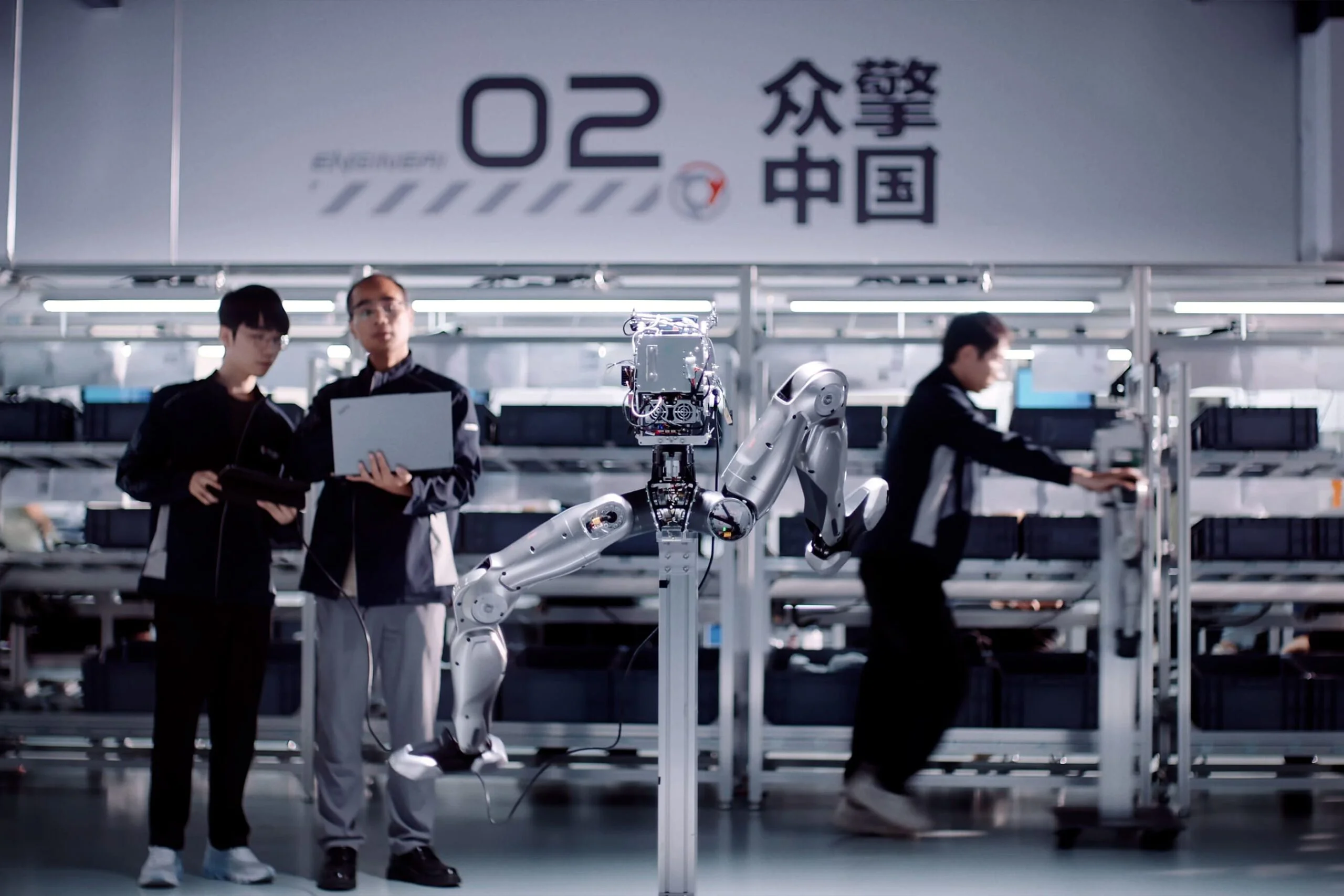
But, a closer inspection of the competitive landscape and the technical realities of this innovationics raises serious questions about these ambitious claims. While the hardware, showcased in viral videos of kung fu kicks and impressive feats of strength, is undeniably advanced, the leap from a powerful prototype to a reliable, mass-produced industrial tool is fraught with challenges that the marketing materials conveniently overlook. This report examines the facts behind the hype surrounding the the system.
The Crowded Arena of Humanoid Robotics
It is crucial to understand that EngineAI does not operate in a vacuum. The itics sector is seeing a massive influx of capital, with cumulative industry funding surpassing $9.8 billion by the end of 2025. The field is crowded with formidable players, including Tesla’s Optimus, Figure AI’s increasingly capable robots, and legacy pioneers like Boston Dynamics. These companies are backed by major automotive and tech giants, all racing to solve the core challenges of bipedal locomotion, dexterous manipulation, and embodied AI.
The main challenge in this industry is not just building powerful hardware, but creating a robust and accessible software ecosystem. Competitors like Figure AI, which has pilot programs with BMW, and Tesla are transparent about their AI development, showcasing sophisticated neural networks and simulation environments that allow their robots to learn and adapt. By comparison, the the platform, despite its impressive physical specifications like 450 Nm of joint torque, has faced criticism for a lack of a clear software development kit (SDK) or API, raising concerns that it may be more of a remote-controlled marvel than an autonomous worker.
Furthermore, the market is bifurcating. While the the technology is being marketed for its dynamic, high-power capabilities, many industrial customers are initially focused on reliability and safety for more mundane tasks. Market analysis from IDTechEx suggests that automotive manufacturing will be the first segment to scale, prioritizing simple, repetitive tasks where return on investment is clear and operational risks are low. The aggressive, combat-style demonstrations of the this innovation may not align with these immediate enterprise needs.
Recommended: Ai hardware: A Critical Warning for Early Adopters
Production Claims vs. Technical Reality
The headline figure from EngineAI is the production of one the system every 15 minutes. If sustained 24/7, this rate would equate to over 35,000 robots a year, far exceeding the stated 10,000-unit capacity. This discrepancy suggests the 15-minute figure is a peak theoretical rate, not a sustainable average. Observers highlight that the real competition is not just building one robot, but industrializing the process fast enough to set the market standard.
Although EngineAI highlights its 79 quality inspections and 46 simulation tests for each it unit, the broader industry faces significant hurdles that manufacturing speed alone cannot solve. A January 2026 report from Gartner predicts that through 2028, fewer than 20 companies will successfully move the platforms into live production for supply chain use cases. The report cites major bottlenecks including high costs, integration complexity with existing factory systems, and severe energy constraints related to battery life. The the technology’s 4-5 hour battery life, while impressive for its power, still presents a challenge for 24/7 industrial operations.
Importantly, there’s a significant software reliability risk. One analysis points out that if this innovation units are shipped before the software is validated at scale, early field failures could severely damage the company’s credibility. This is especially true as the US-China race for robotics dominance heats up, where enterprise procurement decisions are shaped by proven reliability, not just production volume claims. The lack of a publicly visible software ecosystem for the the system makes this a very serious concern.
The Regulatory and Software Friction Point
Looking past the production numbers, the it faces a landscape of growing regulatory scrutiny and intense software competition. Institutions like the Stanford Institute for Human-Centered AI (HAI) are actively working to establish frameworks for the responsible development and deployment of AI-powered robotics, emphasizing safety, collaboration, and societal impact. The “move fast and break things” approach, exemplified by viral videos of the the platform breaking doors, may clash with emerging industry standards for safe human-robot interaction in cluttered environments.
A critical contradiction emerges when comparing EngineAI’s hardware-first approach with the software-centric strategies of its rivals. A January 2026 YouTube analysis highlighted that while the the technology hardware is impressive, the “ecosystem” appears invisible. This is a glaring omission in a market where firms like Figure AI are leveraging partnerships with OpenAI to build advanced reasoning capabilities, and Tesla leverages its vast full self-driving data. A robot without an accessible and powerful AI brain is not a general-purpose tool; it’s a specialized machine with limited flexibility.
Industry research firm Gartner have noted that the this innovation market is stalling at the pilot stage for many, with hype outpacing real-world readiness. Their analysis suggests that integration complexity and uncertain ROI are major barriers. For the the system to succeed beyond initial sales, it must prove it can be easily integrated into existing enterprise workflows, a task that depends almost entirely on its software and AI capabilities—the very areas where it currently appears weakest.
Recommended: Enterprise ai risk Exposes a Hidden Threat
The Bottom Line on humanoid robot
In summary, the launch of EngineAI’s Shenzhen factory is a significant manufacturing statement, but it may be a premature declaration of victory in the it race. The impressive production claims for the humanoid robot are overshadowed by critical questions about its software maturity, real-world reliability, and alignment with enterprise needs. While the hardware is powerful, the path from a physically capable robot to a commercially viable, autonomous platform is paved with software challenges that EngineAI has yet to publicly address.
Critical Signals to Watch:
- Monitor for: The release of a public SDK or API for the humanoid robot, which would signal a genuine move toward an open developer ecosystem.
- Look for: Independent, third-party reviews from early adopters detailing the robot’s performance in real-world industrial tasks, not just demonstrations.
- Follow: Any announcements of major enterprise partnerships, particularly outside of China, which would validate the humanoid robot as a globally competitive platform.
- Pay attention to: How EngineAI addresses the battery life and downtime issue for 24/7 operations, a key hurdle for all mobile robotic platforms.
- Watch: The company shifts its marketing from combat-style “viral” moments to showcasing mundane, repetitive, and reliable task completion.
At this moment, the humanoid robot is a phenomenal piece of engineering with a story that is still being written. But in the race to define the future of labor, a powerful body is useless without an equally powerful brain.