
In a stunning turn for the semiconductor industry, the theoretical “memory wall” has become a full-blown crisis for the artificial intelligence sector. The foundational Von Neumann architecture, which separates processing from memory, is now a major bottleneck, throttling AI model growth and driving up energy costs to unsustainable levels. This physical limit is forcing a radical rethink of chip design. In this high-stakes environment, compute-in-memory has emerged as the most talked-about solution, promising to tear down the memory wall by performing calculations directly inside memory arrays.
Table of Contents
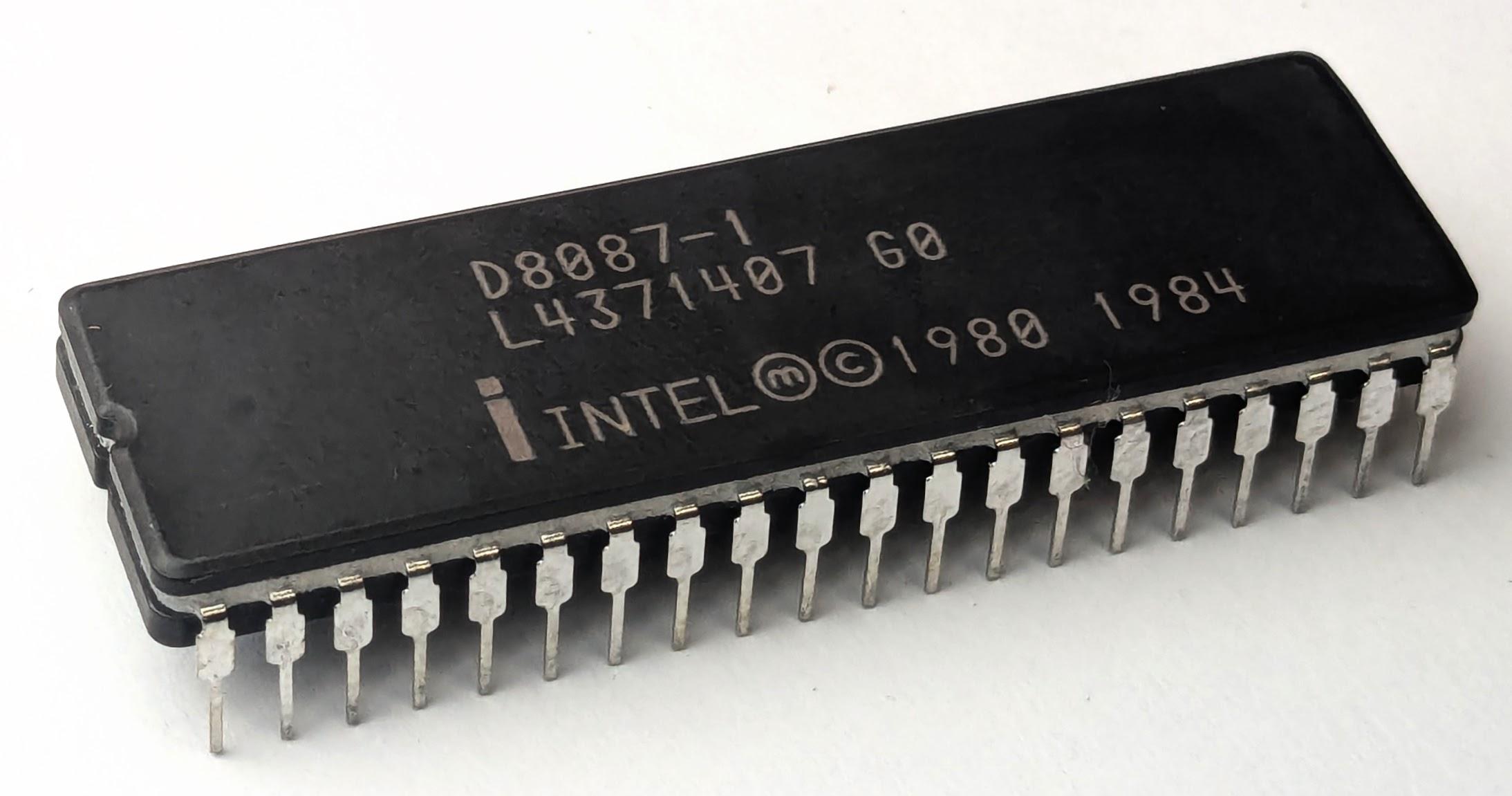
However, this investigation reveals a more complex reality. Although the potential is clear, the path to widespread adoption of compute-in-memory is riddled with technical compromises, software challenges, and economic hurdles that marketing materials conveniently overlook. This report unpacks the claims versus the ground truth.
The Current State of the CIM Battlefield
A fierce competition to master compute-in-memory is now in full swing, with a diverse set of companies placing major bets. Tech giants like Samsung and SK Hynix are aggressively pushing their Processing-in-Memory (PIM) solutions, particularly by integrating logic into High-Bandwidth Memory (HBM) and LPDDR memory modules. Samsung, for instance, has already moved its HBM-PIM technology into the commercial validation phase, with samples of LPDDR5X-PIM expected in the second half of 2026.
At the same time, a vibrant ecosystem of startups and specialized firms is exploring alternative paths. Companies like Syntiant, GSI Technology, and Axelera AI are developing unique architectures, from analog and digital in-memory computing to associative processing units. Foundry titan TSMC is also a critical player, developing the underlying manufacturing processes and exploring novel memory technologies like RRAM and MRAM to enable next-generation compute-in-memory capabilities.
The key competitive advantage, however, isn’t just the hardware itself. It’s the software. Making compute-in-memory accessible requires a complete, vertically integrated toolchain—from specialized compilers to new programming models and software frameworks. Without this ecosystem, even the most groundbreaking chip is little more than a lab curiosity, creating a significant hurdle for new entrants and reinforcing the power of established players with deep software expertise.
Recommended: Silicon photonics: The Critical Risk in AI’s Data Center Future
Investigating the Performance Claims of compute-in-memory
Proponents of compute-in-memory often cite staggering gains, with some suggesting 100x improvements in energy efficiency. Our investigation confirms that while impressive results are possible, they are highly conditional. For example, early tests of Samsung’s HBM-PIM in a Xilinx Alveo accelerator did show a system performance gain of nearly 2.5x and over 60% less energy use. These numbers are significant but far from the triple-digit improvements sometimes advertised.
The crucial caveat is that these benefits are often confined to very specific workloads. compute-in-memory excels at the massively parallel vector-matrix multiplications that dominate AI inference. On the other hand, for general-purpose computing tasks or workloads that aren’t easily parallelized, its performance can fall short of traditional CPU and GPU architectures. The architecture is specialized, not a universal replacement.
Furthermore, many analog compute-in-memory approaches face inherent challenges with precision and noise. While digital CIM offers higher accuracy, it often comes at the cost of lower density and higher area overhead. Emerging research in memristor technology show promise for high-precision analog compute, with some devices achieving 14-bit resolution, but these are still largely in the research phase as of 2026 and not yet in mass commercial production. This means that for many current applications, choosing compute-in-memory involves a direct trade-off between energy efficiency and computational accuracy.
Regulatory and Technical Hurdles for compute-in-memory
A significant hurdle is found at the heart of the compute-in-memory paradigm. Memory devices are optimized for density, endurance, and low cost, while logic circuits are optimized for speed. Merging them on the same silicon die requires unavoidable compromises. This can result in lower manufacturing yields, increased fabrication complexity, and potential impacts on memory reliability and data retention—costs that are rarely discussed in press releases.
The most daunting challenge to widespread adoption is the software ecosystem. A new compute-in-memory chip is useless without a compiler that can efficiently map neural networks onto its unique architecture. This lack of standardization and the need for proprietary software tools create a massive risk of vendor lock-in, a prospect that makes many enterprise customers wary. Until open-source frameworks and standardized interfaces mature, compute-in-memory will likely remain a niche technology primarily used by hyperscalers who can afford to invest in custom software stacks.
Industry analysts are beginning to voice these concerns. A recent Gartner forecast highlights that while AI is driving massive investment in data center systems, the complexity and cost of new architectures are also creating uncertainty. The current AI-driven memory shortage, which is expected to last through 2027, further complicates the economics, as manufacturers are prioritizing high-margin HBM production over investment in more experimental architectures. This economic reality could slow the commercialization of many promising compute-in-memory technologies.
Recommended: Humanoid robot: A Critical Analysis of the Mass Production Hype
The Bottom Line on compute-in-memory
Ultimately, compute-in-memory is not the silver bullet that will slay the Von Neumann architecture overnight. It is a highly promising and specialized tool that offers a legitimate path to overcoming the memory wall for specific, data-intensive AI workloads. However, as of May 2026, the hype has significantly outpaced the enterprise-ready reality. The technology is real, but the claims of a universal revolution are premature. The transition will be an evolution, not an overthrow.
Critical Signals to Watch:
- Monitor: The emergence of open-source compiler toolchains that abstract the hardware complexity, similar to what CUDA did for GPUs.
- A crucial indicator: The first major enterprise software (e.g., from Oracle or SAP) that is natively optimized for a commercial compute-in-memory architecture.
- Follow: Standardization efforts by bodies like JEDEC for PIM-enabled memory interfaces, particularly for future standards like LPDDR6.
- A critical signpost: The first “killer app” outside of hyperscaler AI that runs demonstrably and prohibitively better on compute-in-memory than on any available GPU or TPU.
- A noteworthy event: The financial results from startups in the space; whether companies like Axelera AI or GSI Technology can achieve profitability and scale production.
At present, the industry is grappling with the immense cost and complexity of this architectural shift. While the promise of compute-in-memory is undeniable, its true impact will be determined not by benchmark bravado, but by the slow, difficult work of building the software ecosystem and proving its economic value in a market constrained by memory shortages and rising costs.