
New government data on ai usage statistics paint a deceptively simple picture of progress, but a skeptical analysis reveals a far more turbulent and risky landscape. According to the U.S. Census Bureau’s latest Business Trends and Outlook Survey (BTOS) released in May 2026, overall AI usage in American businesses hovers just under 20%. At first glance, this figure seems to represent steady, if modest, growth.
Table of Contents
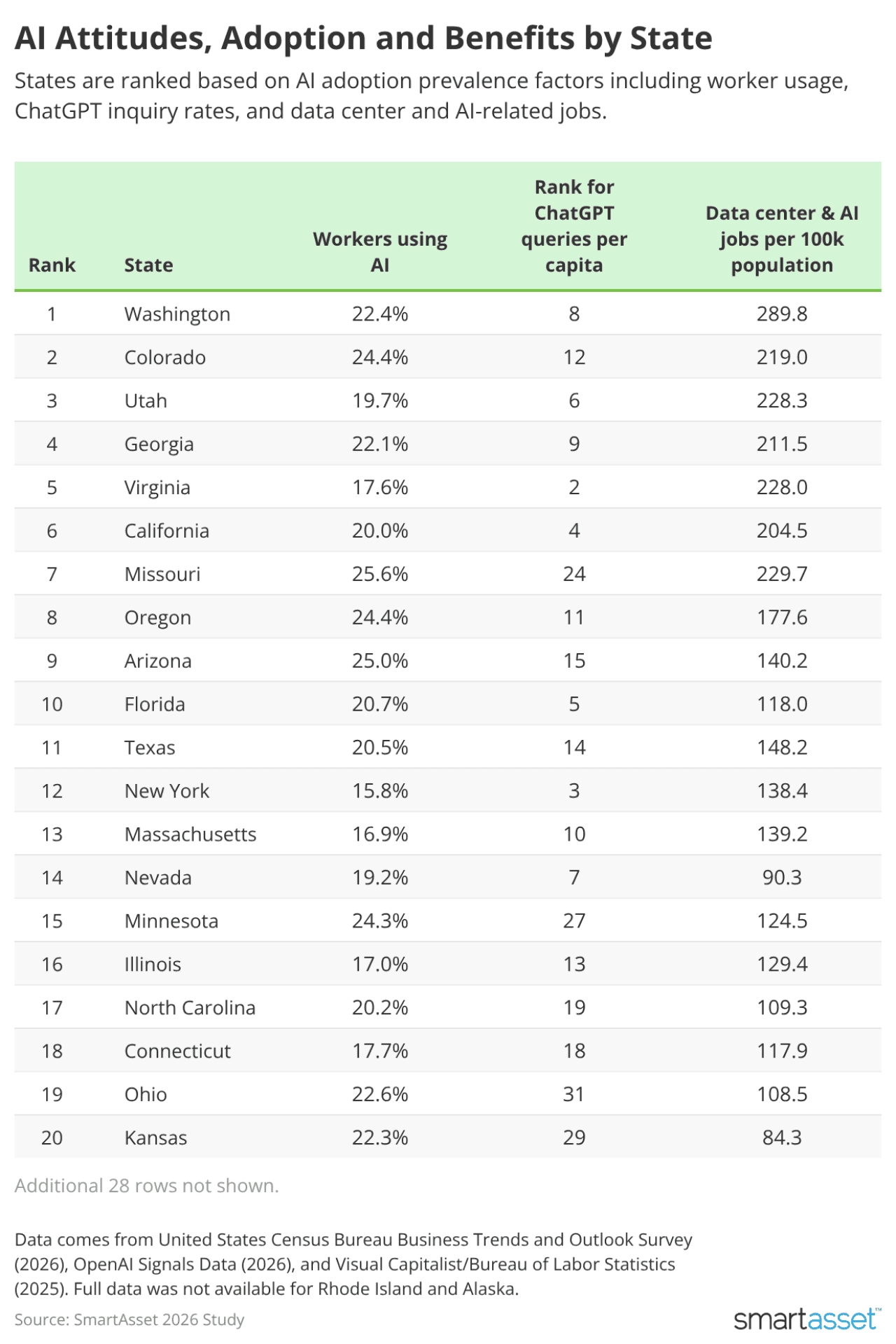
However, the devil is in the details. The same report exposes a stark divide: while 37% of large firms with over 250 employees are actively using AI, fewer than 20% of small businesses with less than four employees can say the same. This chasm suggests that the technology is not a universally rising tide but a wave lifting only the biggest boats, leaving smaller enterprises struggling in its wake and creating significant market vulnerabilities.
Unpacking the 2026 AI Adoption Gap
Analysis confirms that the landscape of this innovation is profoundly uneven. The U.S. Census Bureau numbers are clear: sectors like Information (39.7%) and Finance (33.9%) are far outpacing the national average, while industries such as Retail Trade lag significantly at just 14%. This disparity highlights how digital-native or data-intensive industries find it easier to integrate AI, whereas others face fundamental operational hurdles.
Furthermore, the type of AI being adopted is often misunderstood. Pundits often conflate the use of simple, off-the-shelf generative AI tools for tasks like email drafting with deep, strategic the system integrated into core business processes. The Census data itself was revised to ask about AI use “in any business function,” a much broader and lower bar than its original focus on using AI “in producing goods or services.” This change in methodology may artificially increase the perceived rate of meaningful it. True transformation remains elusive for the majority.
Also read: Apple atoken Reveals a Critical Shift in AI Models
In truth that while spending forecasts are astronomical—with Gartner predicting global AI investment to hit $2.59 trillion in 2026—the operational capability of most organizations is lagging far behind. An IBM report notes that AI capability is advancing faster than organizational readiness, with many enterprises still battling fragmented data, incomplete governance, and significant talent gaps.
The Sobering Truth About AI Implementation Costs
Although leaders praise AI’s potential, the ground-level reality is fraught with challenges that threaten return on investment. A key data point from Gartner research indicates that only 41% of AI projects actually make it from a prototype to production deployment. This shocking failure rate underscores the immense gap between purchasing an AI tool and achieving genuine the platform.
One of the primary culprits is poor data quality and readiness. An estimated 95% of IT leaders identify integration issues as the main barrier to successful AI implementation. Many companies operate with siloed, inconsistent data environments built over decades, making them fundamentally incompatible with the demands of modern AI systems. This isn’t just a technical problem; it’s a core business risk that can render massive AI investments useless.
A further complication is the severe shortage of skilled talent. A recent Gartner survey revealed that only 20% of executives believe their workforce is truly AI-ready. This skills gap forces companies into a fierce competition for talent, driving up costs and delaying projects. Without a people-centric strategy that prioritizes upskilling, even the most advanced technology for the technology will fail to deliver results.
You might also like: Musician hand: The Breakthrough Redefining Robotic Learning
Navigating Contradictions in AI Ethics and Law
As if the technical hurdles weren’t enough, a storm of regulatory and governance issues is gathering on the horizon. The 2026 AI Index from the Stanford Institute for Human-Centered Artificial Intelligence (HAI) highlights a widening gap between what AI can do and how prepared society is to manage it. Mechanisms for control, evaluation, and understanding are failing to keep pace with rapid technological advancement.
This creates a significant contradiction for businesses pursuing this innovation. On one hand, they are pushed to innovate and deploy AI to remain competitive. On the other, they face mounting pressure from regulators and the public to ensure their AI systems are safe, ethical, and unbiased. With regulations like the EU AI Act coming into force, companies without robust AI governance platforms are exposed to substantial legal and financial risks.
Experts warn that many organizations are dangerously unprepared. A PwC report from 2026 predicts that while companies know Responsible AI (RAI) is important, nearly half have struggled to turn principles into operational practice. This “governance gap” is a ticking time bomb, where a single AI-driven failure—be it a data breach, a biased decision, or a system hallucination—could lead to catastrophic reputational and financial consequences.
The Bottom Line on ai usage statistics
In summary the narrative of a smooth and widespread ai usage statistics is a dangerous oversimplification. The U.S. Census data, when scrutinized, reveals a fractured landscape defined by a deep chasm between large, well-resourced corporations and everyone else. While spending is exploding, true operational success is hamstrung by broken data infrastructure, talent shortages, and a profound governance deficit. For most organizations, the journey toward meaningful ai usage statistics is just beginning, and it is far more perilous than the headlines suggest.
Critical Signals to Watch:
- Keep an eye on: The ratio of AI project pilots to successful production deployments. A high failure rate is a leading indicator of systemic issues.
- Track: The evolution of AI-specific regulations, particularly the EU AI Act and emerging U.S. federal guidelines, which will define compliance costs and risks.
- An important metric: The demand for “AI governance” and “data integration” skills in job postings, as this reflects where companies are feeling the most pain.
- Analyze: Vendor claims about ROI. Demand proof of value beyond simple “time saved” metrics and focus on how AI drives core business outcomes.
- Measure: The widening adoption gap between industry leaders and laggards. This gap is a strong predictor of future market consolidation and disruption.
In the final analysis, the story of ai usage statistics in 2026 is not about technology—it is about execution. The companies that succeed will be those that confront these hidden risks head-on, investing as much in their people, processes, and governance as they do in the algorithms themselves.