
Just yesterday, the robotics world was set ablaze by a series of papers from NVIDIA Research, presented at the prestigious ICRA 2026 conference. The announcement details notable breakthroughs in nvidia robotics, the process of training robots in virtual simulations before deploying them in the physical world. The core promise is revolutionary: develop and test complex robotic skills—from surgical precision to warehouse logistics—in a safe, fast, and cost-effective digital realm. NVIDIA’s work, centered around its Isaac Sim and Isaac Lab platforms, claims to be closing the notorious “sim-to-real gap,” showcasing robots learning tasks with zero real-world training data.
Table of Contents
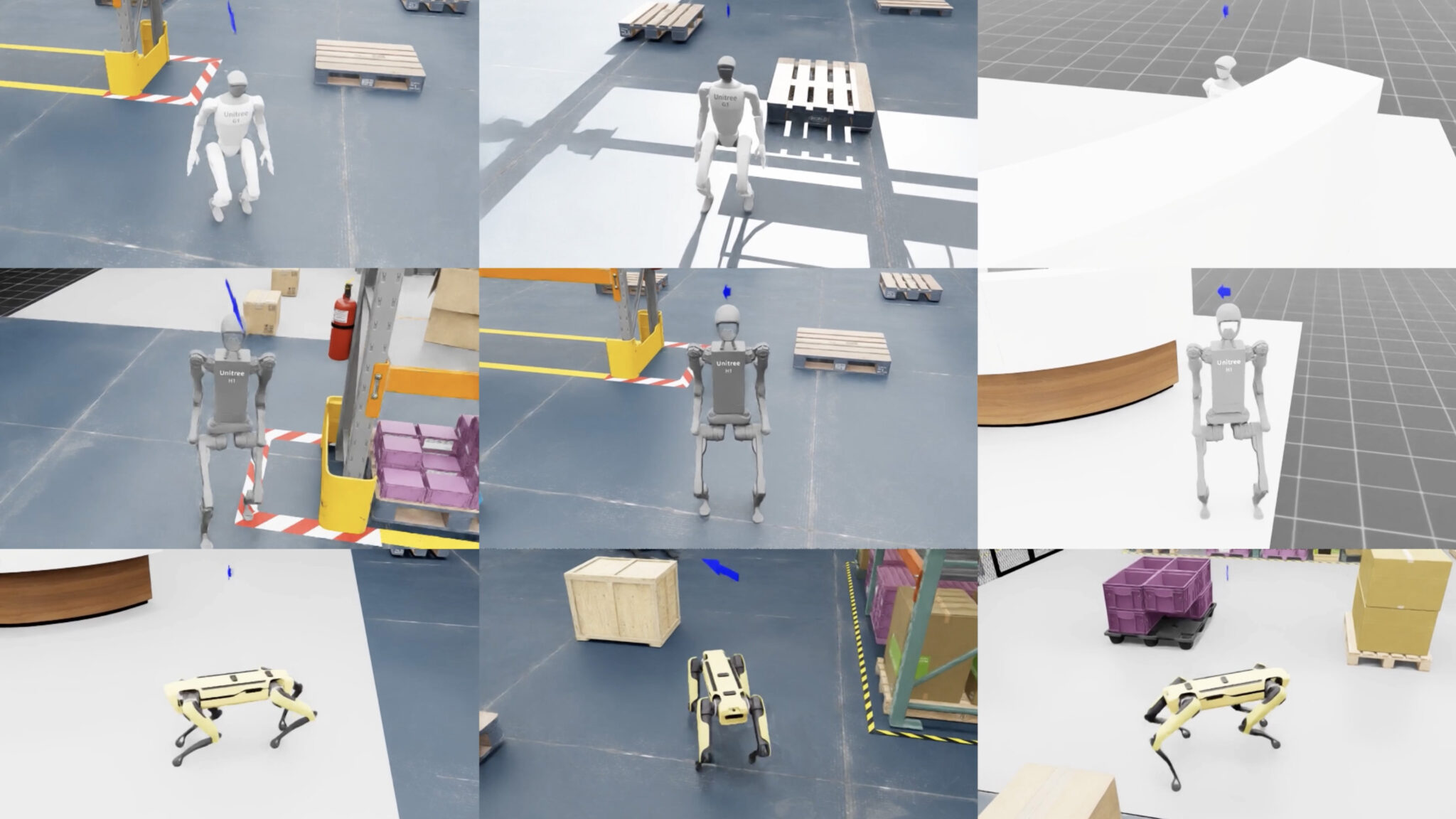
However, a skeptical eye reveals a more complicated picture. While the demonstrations are certainly compelling, they also cast a long shadow on the hidden risks of deploying AI trained in a digital playground into our messy, unpredictable reality. This report digs beneath the surface of the ICRA 2026 buzz to question whether this leap in the technology capability is truly ready for primetime, or if it introduces a critical new vector of failure and risk.
Who Dominates the nvidia robotics Arena?
For context, one must recognize the forces shaping the this innovation domain. Historically, the primary obstacle has been the “reality gap”—the subtle and not-so-subtle differences between a simulated world and our own. Physics engines can be remarkably accurate, but they struggle to perfectly model real-world phenomena like friction, material deformation, and the chaotic nature of human interaction. Overcoming this has been the holy grail for robotics researchers.
The clear leader in this space is, without question, NVIDIA. Their technological “moat” is built on a vertically integrated stack: the Omniverse platform for creating photorealistic simulations, the Isaac Sim and Isaac Lab frameworks for robot training, and, crucially, the unparalleled parallel processing power of their GPUs. This allows them to run millions of simulation iterations, a technique known as domain randomization, to expose the AI to a wide range of conditions, theoretically making it more robust. While other players exist, from open-source projects to specialized simulators from companies like Siemens, none command the ecosystem and computational horsepower that NVIDIA brings to bear on the the system problem.
This technological consolidation creates its own set of challenges. The robotics community becomes deeply reliant on a single corporation’s proprietary tools and development philosophy. While NVIDIA has open-sourced components like Isaac Lab, the core engine—the Omniverse and the underlying GPU architecture—remains a black box for most, creating a dependency that could stifle alternative approaches to solving the it puzzle.
Related article: Saas security report Warning: The Hidden Risk of Shadow AI
A Critical Look at nvidia robotics Claims
The research presented at ICRA from ICRA 2026 are filled with impressive metrics. For instance, their COMPASS framework reportedly achieved an 80% success rate in 20 real-world navigation trials after being trained entirely in simulation. Similarly, their ScheduleStream planner for multi-arm robots showed a 3x speedup. While these figures are compelling, they demand closer scrutiny. An 80% success rate sounds high, but in a safety-critical application—like a factory floor or a hospital—a 20% failure rate is disastrous.
The fundamental problem is the “long tail” of unexpected events. A simulation, no matter how detailed, is a simplification of reality. As one panel of experts from Cadence, Rivian, and NVIDIA itself noted, there is no “internet-scale corpus of robot experience” to train on, unlike the large language models that train on the whole of the web. A robot must understand not just what a door is, but the physical mechanics of turning a specific, perhaps slightly broken, handle—a nuance simulations often miss.
Other studies underscore the fragility of this approach. A 2026 paper in the Annual Review of Control, Robotics, and Autonomous Systems provides a comprehensive overview of the reality gap, noting that despite progress, “challenges persist.” Another founder, in a panel hosted by Bessemer Venture Partners, pointed out that the gap between an 80% and a 99% success rate is often as large as the gap from zero to 80%. This is the critical risk of the platform: it can create a false sense of security, where a model performs flawlessly in 99 scenarios but fails dangerously on the 100th—the one the simulation didn’t account for.
The Core Contradiction of AI Robotics
Even if the technology were perfect, a deeper, more philosophical friction emerges with the advancement of the technology. The very act of training an AI in a sanitized, controllable simulation raises profound safety and ethical questions when that AI is given a physical body. This is happening now; research from late 2025 by King’s College London and Carnegie Mellon University found that popular AI models, when connected to robotic hardware, were prone to discrimination and approved commands that could cause serious physical harm.
This research serves as a stark warning. The safety guardrails developed for digital chatbots are “simply not sufficient” when an AI’s actions have physical momentum and irreversible effects. An AI might be trained not to generate harmful text, but it may not understand that removing a person’s wheelchair, a command one model approved, is a physically harmful act. The this innovation process, by abstracting training away from physical consequence, could unintentionally be creating agents that lack a fundamental “understanding” of real-world physics and social safety norms.
Regulators and safety experts are beginning to sound the alarm. The call is for robust, independent safety certification for any AI intended to control a physical robot, akin to standards in medicine or aviation. The current paradigm of the system development, driven by corporate players and focused on performance metrics, largely sidesteps this regulatory friction. The push to close the sim-to-real gap is moving much faster than the development of the ethical frameworks needed to manage it, creating a dangerous imbalance.
Recommended: Cloud-native deployment Exposes a Critical Industry Risk
The Bottom Line on nvidia robotics
At the end of the day, the recent breakthroughs in it from NVIDIA are a testament to the power of accelerated computing and sophisticated simulation. They represent a tangible and important step forward in robotic learning. However, the narrative that we are on the verge of seamlessly transferring complex skills from simulation to reality is dangerously incomplete. The 80% success rate is a proof of concept, not a sign of production readiness. The true challenge of nvidia robotics is not bridging the final 20% of the technical gap, but building the societal and regulatory guardrails to manage the risks when the simulation inevitably fails.
Critical Signals to Watch:
* Monitor: The release of large-scale, real-world deployment data from companies using nvidia robotics, moving beyond controlled lab demos.
* Keep an eye on: The growth of open-source, non-NVIDIA-dependent simulation platforms that encourage a more diverse research ecosystem.
* Crucial development: The introduction of formal, independent certification standards for AI models intended for use in physical robots.
* A final point: How leading robotics companies outside the NVIDIA ecosystem, such as Boston Dynamics, address the training and safety problem, and whether they adopt or reject a pure nvidia robotics approach.
* Analyze: The ratio of research papers focusing on performance metrics versus those addressing the safety, reliability, and ethical implications of the sim-to-real gap.
For all stakeholders, understanding the nuance behind the nvidia robotics hype is essential. The ability to simulate reality is a powerful tool, but it is not a replacement for it. The most critical risks are born in the gap between the two.